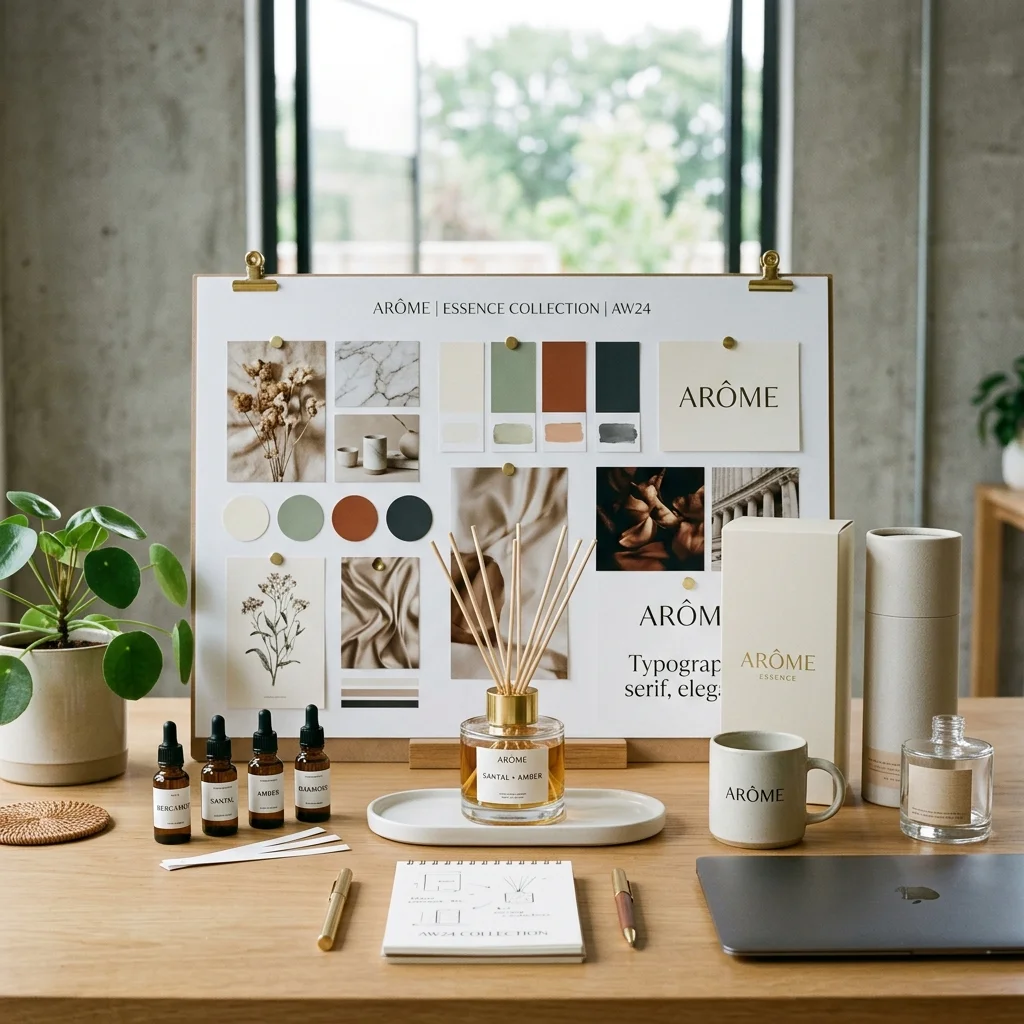
Short answer: High-quality 3D product visuals allow fragrance brands to present bottles, boxes and collections before or after physical production. They are useful for e-commerce, investor presentations, social media, advertising, packaging approval and international sales. The strongest visuals are based on accurate product dimensions, materials and artwork rather than generic mockups.
Why fragrance products are difficult to photograph and present
Perfume packaging combines transparent glass, reflective caps, metallic decoration, textured paper and small typography. These materials are difficult to photograph consistently, especially before the final production samples exist.
3D visualization gives the brand control over camera angle, light, background and material appearance. It can show the same product in a clean catalogue image, a premium campaign scene and a complete collection layout without rebuilding the physical set each time.
3D visualization is not a replacement for the real product
The purpose of a professional 3D render is to represent the approved product accurately. It should not hide technical problems or create a bottle that cannot be manufactured.
The best workflow begins with confirmed dimensions, bottle photographs or CAD data, cap specifications, label artwork, box dielines and print finishes. When these inputs are accurate, the render becomes a practical sales and approval tool.
Use 3D visuals before production
Before manufacturing, 3D images help founders compare bottle and cap combinations, evaluate label proportions, review box structure and present the project to partners or distributors.
This stage can reveal visual problems early. A logo may be too small, a label may conflict with the bottle curve, or the cap may appear unbalanced. Correcting these issues in 3D is faster than reprinting packaging after a physical sample.
Use 3D visuals after production
After the product is approved, the 3D model can create consistent images for website banners, product pages, online marketplaces, social media, brochures and trade presentations.
A brand can produce seasonal scenes, different language versions and campaign formats without repeatedly transporting fragile glass products to a studio.
Which visual types support sales?
White-background product renders are suitable for catalogues and e-commerce. Three-quarter hero renders show the bottle and box together. Close-up material views communicate foil, embossing, glass texture and cap quality. Collection renders help customers understand multiple fragrances. Lifestyle scenes connect the product with a market, such as a modern European home, Gulf luxury setting or hotel environment.
Looking for manufacturing for your brand?
Share the product, quantity and target market; we will prepare a project-specific quote.
Animation can show the cap opening, fragrance mist, rotating packaging, ingredients or the assembly of a gift set. Short vertical versions can be adapted for social media and advertising.
Accuracy creates trust
Customers notice when a render and the delivered product do not match. Glass colour, cap height, label position, typography, bottle proportions and box dimensions must remain consistent.
For this reason, the visual team should work from the same approved files used for manufacturing. Any changes made during production should also be updated in the 3D model.
How visuals improve international B2B communication
International buyers often make early decisions remotely. A clear 3D presentation can show the proposed bottle, cap, label and box before samples are shipped.
This reduces misunderstandings, helps the buyer compare options and creates a professional quotation experience. It is especially useful when a project includes several fragrances using one packaging system.
Product visualization and conversion
A 3D image cannot compensate for a weak product or unclear offer. It performs best when combined with useful commercial information: bottle volume, fragrance type, MOQ, packaging options, production process and delivery terms.
On an e-commerce page, the visual set should answer practical questions. Show the front, side, box, scale, spray mechanism and collection. For B2B pages, include packaging choices and production capability rather than only atmospheric campaign images.
A practical 3D content workflow
- Confirm the bottle, cap, pump and box.
- Collect accurate dimensions and artwork.
- Build the 3D model and materials.
- Approve a neutral product render.
- Create catalogue, lifestyle and campaign scenes.
- Export web, social media and print formats.
- Update the model when the physical product changes.
Frequently asked questions
Can 3D visuals be created before the bottle is manufactured?
Yes, provided accurate dimensions, reference images or technical files are available. The render should be updated after the final sample if any component changes.
Are 3D images suitable for e-commerce?
Yes. White-background renders, detail views and collection images can support product pages when they accurately represent the delivered item.
Can one model be used for video?
Yes. A correctly built model can be used for still images, rotating videos, short animations and different campaign scenes.
Should the label artwork be final first?
A draft can be used for early review, but final sales visuals should use the approved production artwork.
Can 3D visuals show custom packaging finishes?
Yes. Foil, embossing, coating, transparent glass, metallic caps and textured paper can be represented when the intended materials are clearly specified.
Request a project-specific proposal
Present your fragrance project professionally before launch. Kendi Markanda Perfume can coordinate packaging design, product visualization and manufacturing so that the approved visual direction remains connected to the final product.