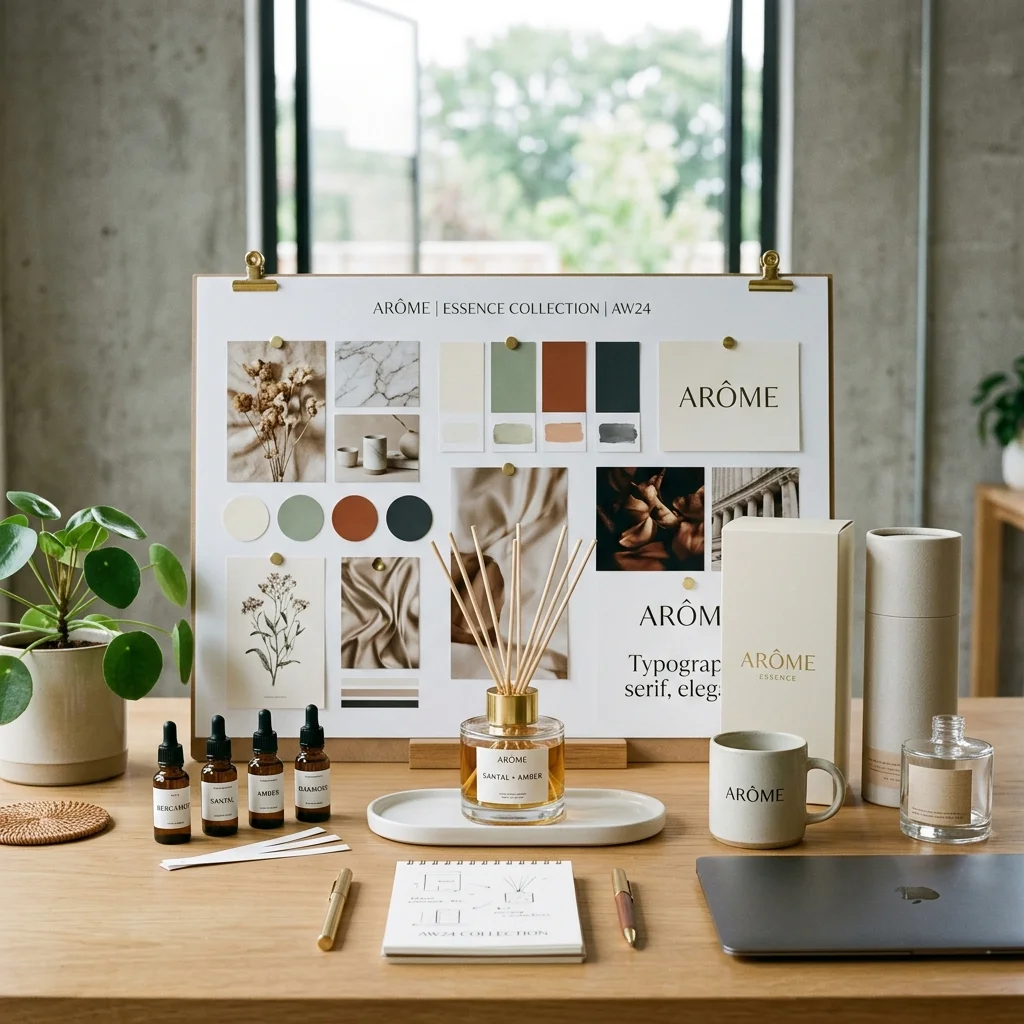
Short answer: A signature scent gives a brand a consistent sensory identity across physical spaces and branded products. Hotels, retailers, spas, real estate projects and premium companies can use a custom fragrance direction in room sprays, reed diffusers, candles, cologne or gift perfumes. The goal is not simply to make a space smell pleasant, but to connect scent with the brand experience.
Why scent matters in a luxury brand experience
Luxury is built through controlled details. Architecture, lighting, music, materials, service and packaging all influence how a customer remembers a brand. Fragrance can support these elements because it is experienced immediately and can remain strongly associated with a place or occasion.
A signature scent should not overpower the environment. It should feel intentional, recognisable and consistent with the visual and emotional character of the brand.
What is a signature scent?
A signature scent is a fragrance direction developed or selected for one brand experience. It may be used as an ambient product within a location or extended into retail and gifting products.
For example, a coastal hotel might use mineral, citrus, aromatic herb and light wood notes. A dark premium restaurant may prefer amber, leather, spice and polished woods. A wellness space may use soft tea, botanical and clean musky notes. The scent direction should reflect the actual environment rather than following a generic idea of luxury.
Who can use a branded signature fragrance?
Hotels and resorts can use signature room products and guest gifts. Retail stores can connect scent with their interior and packaging. Real estate projects can use a consistent fragrance in sales offices and show apartments. Spas and clinics can support a calm, clean atmosphere. Restaurants and cafes can create branded gift products without interfering with food aromas. Corporate brands can use perfume, cologne, candle or diffuser sets for events and VIP gifts.
From ambient scent to branded product collection
A signature fragrance becomes commercially more valuable when customers can take it home. The scent concept can be adapted into products such as reed diffusers, room sprays, candles, cologne and gift perfume.
Each product requires a formula appropriate to its use. A fragrance direction can remain consistent, but a perfume formula is not the same as a diffuser or candle formula. Performance and safe-use requirements must be evaluated separately.
How to create the fragrance brief
A useful brief describes the brand, space, audience and intended emotional effect. Include interior materials, dominant colours, location, customer profile, service style, products already sold and fragrances that should be avoided.
Words such as “luxury”, “fresh” or “exclusive” are too broad on their own. More useful descriptions include “quiet Mediterranean hotel with limestone, linen and olive wood” or “contemporary jewellery boutique with black metal, warm lighting and minimalist packaging”.
Looking for manufacturing for your brand?
Share the product, quantity and target market; we will prepare a project-specific quote.
Choose the right product formats
Reed diffusers provide passive fragrance and a decorative object. Room sprays offer immediate control. Candles add ritual and gifting value. Cologne can support hospitality and cultural positioning. Small perfumes can become VIP gifts or retail products.
The first collection should focus on the formats the customer will genuinely use. A hotel may begin with a lobby-inspired room spray, reed diffuser and candle rather than launching a large consumer perfume range immediately.
Packaging should reflect the space
The product should feel like a continuation of the interior. Bottle colour, label material, typography, box finish and cap choice should connect with the physical brand environment.
Premium packaging does not always require custom moulds. A carefully selected stock bottle, consistent decoration and restrained typography can look more sophisticated than an over-designed package.
Operational and commercial planning
Before production, confirm where the product will be used, sold or gifted; the expected annual quantity; the number of locations; storage conditions; target retail price; and who will manage local compliance and import requirements.
For branded product production, minimum quantities depend on the product and packaging. Perfume commonly begins at 1,000 units per fragrance and per bottle model, room fragrance at around 1,000 units per variation, and candle projects at 500 units per fragrance and per container model.
Common mistakes in scent branding
Choosing a fragrance only because the owner personally likes it can ignore the customer and environment. Using very strong diffusion can make the space uncomfortable. Copying a famous hotel scent creates no distinctive identity. Producing products before finalising the brand system leads to inconsistent packaging. Using one unchanged formula across perfume, diffuser and candle ignores technical differences.
Frequently asked questions
Is a signature scent the same as scent marketing?
A signature scent is the fragrance identity. Scent marketing is the broader strategy of using scent to support customer experience, recognition and commercial goals.
Can the same scent be used in a hotel and in retail products?
The same creative direction can be adapted, but each product format requires its own technically suitable formula.
Do we need a completely original formula?
Not always. The project can use a selected fragrance direction, an adapted option or a separately commissioned custom development.
Can you produce branded gifts for hotels and companies?
Yes. Product options can include room sprays, reed diffusers, candles, cologne and perfume, subject to the selected specifications and minimum quantities.
Can packaging match our interior design?
Yes. Labels, boxes, colours and decoration can be developed around the established brand and interior design system.
Request a project-specific proposal
Create a signature fragrance that customers can recognise in your space and take home as a branded product. Share your brand concept, venue type, target market and preferred product formats for a tailored proposal.