Short Answer
You do not need a factory, a laboratory or a chemistry background to launch a perfume brand. You choose the fragrance, the bottle, the cap and the packaging; blending, filling and labelling happen at a contract manufacturer. The entry point is 1,000 units per fragrance and per bottle model for perfume, and once the design and the scent are approved, standard products are produced in 4-6 weeks. Three things are expected from you: know who you are selling to, pick a fragrance direction, and split your budget between packaging and production.
Six Decisions That Turn an Idea Into a Product
"I want to launch my own perfume" becomes workable once it is broken into six separate decisions. The order matters, because each one narrows the next.
1. Who are you selling to?
Your own store, e-commerce, corporate gifting, or a distributor abroad? This answer drives everything from bottle choice to label language, from volume to how sturdy the outer packaging must be. A product sold on a marketplace and a product placed in a hotel room do not have the same packaging requirements.
2. Which product group?
Perfume, cologne, room fragrance, car fragrance and scented candles are different production lines with different minimums and cost structures. Most brands start with one group and expand once they have sales data.
3. Fragrance direction
Developing a bespoke formula from scratch is a separate R&D process. Selecting from an existing fragrance library is faster and makes the sampling stage easier to iterate. First collections are usually built from the library.
4. Bottle and cap
The bottle is your product's first sentence on the shelf. Choosing from stock moulds noticeably reduces both cost and lead time; a custom mould is a separate investment in money and weeks. Browse perfume bottles and caps so you can start the conversation with a specific code.
5. Packaging and label
A label is not only design. Ingredient declaration, warnings, batch number and volume are regulated. Designing around those rules from the start prevents a reprint later.
6. Quantity and timing
Being realistic on the first order beats sitting on unsold stock. Minimums are below.
Who Does What
| You, the brand owner | The contract manufacturer |
|---|---|
| Audience and positioning | Fragrance sourcing and base preparation |
| Scent approval from samples | Blending, maceration, filtration |
| Bottle, cap and packaging choice | Filling, crimping, labelling |
| Label and box design | Packing and shipment preparation |
| Sales and marketing | Production records and batch tracking |
The brand story stays with you; the manufacturing technique stays with the producer.
Minimum Order Quantities (Per Single Fragrance)
The figures below apply per single scent. Two different fragrances are calculated separately.
| Product | Minimum quantity |
|---|---|
| Perfume | 1,000 |
| Room fragrance / reed diffuser | 1,000 |
| Room spray | 500 |
| Cologne (glass bottle) | 1,000 |
| Cologne (plastic bottle) | 2,000 |
| Scented candle | 500 |
Because the candle threshold is the lowest, brands with a tighter first budget often start there and grow the collection from that point.
Looking for manufacturing for your brand?
Share the product, quantity and target market; we will prepare a project-specific quote.
How Long Does It Take?
Once design and fragrance are approved, standard products are produced in 4-6 weeks. Before that there is a decision stage: sample request, scent trials, bottle selection and label design. That stage depends entirely on how fast you respond, and in most projects it accounts for about half of the total calendar.
Custom bottle moulds, bespoke formula development and special print finishes extend the timeline. Skipping those on a first collection gets the product to market sooner.
Labelling and Compliance by Market
Selling a cosmetic product is more than putting a brand name on a label. In Türkiye, cosmetics are notified through ÜTS (the Product Tracking System) under TİTCK regulation, fragrance raw materials are restricted by IFRA standards, and chemical notification falls under KKDİK.
If you are selling abroad, the destination market's rules apply:
- European Union: Cosmetics Regulation (EC) No 1223/2009, CPNP notification, a designated Responsible Person and CLP-compliant labelling.
- United States: FDA labelling rules with INCI ingredient declaration; GS1 barcodes for marketplace and retail channels.
- Arabian Peninsula / GCC: GSO standards, SFDA in Saudi Arabia, ESMA in the UAE, and Arabic labelling expectations.
Specific requirements are confirmed per project. Naming your destination market at the start means the label and packaging are planned for it once, rather than reprinted later.
Manufacturing From Türkiye, Shipping Worldwide
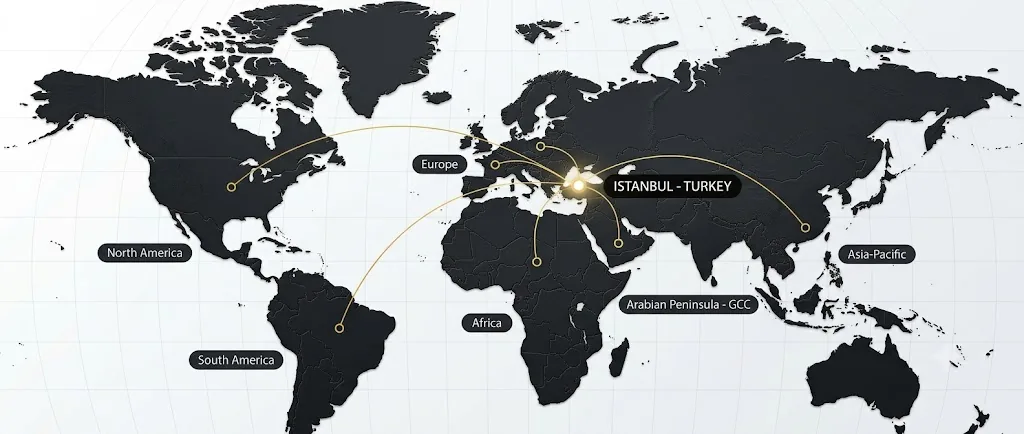
We manufacture in Istanbul and export to Europe, North and South America, the Arabian Peninsula and Africa. With international buyers, the step that most often causes delay is not the product itself but label and document planning. See our worldwide export page for regions, MOQ and the international quotation process.
What to Bring to the First Call
If you can answer these four questions, a concrete roadmap can be drawn in the first conversation:
- Which product group, and how many different fragrances?
- Where will you sell — retail, e-commerce, corporate, export?
- Is there a fragrance direction or reference product you like?
- Stock bottle mould or custom mould?
If you have no firm answers yet, that is fine — those questions are what the conversation is for.
Four Common Mistakes
- Launching with too many fragrances. Five scents means five separate minimums. Starting with two and scaling the one that sells carries less risk.
- Spending the whole budget on packaging. An impressive bottle does not produce repeat sales if the scent does not hold.
- Leaving the label to the end. Regulatory requirements change the design; discovering them late forces a reprint.
- Mentioning the export market late. If the destination is known from the start, label and packaging are planned correctly the first time.
Frequently Asked Questions
Do I need a chemistry background to start a perfume brand?
No. Fragrance selection is made from samples, while formulation, production and filling are handled by the contract manufacturer. Your role is to define the audience, the fragrance direction and the packaging.
What is the smallest quantity I can start with?
Per single fragrance: 1,000 units for perfume and room fragrance, 500 for room spray, 1,000 for cologne in glass bottles, 2,000 for cologne in plastic bottles, 2,000 for car fragrance, and 500 for scented candles.
Can you develop a bespoke fragrance from scratch?
Yes. Custom fragrance development is a separate R&D process quoted according to project scope. For first collections, most brands select from an existing fragrance library.
How long does production take?
4-6 weeks for standard products after design and fragrance approval. Custom bottle moulds or bespoke formula development extend this.
How do I choose a bottle and cap?
You can select by code from the catalogue. Note the codes on the perfume bottles and caps pages and share them in your enquiry.
Do you ship internationally?
Yes. We manufacture and export to Europe, North and South America, the Arabian Peninsula (GCC) and Africa. Label and packaging are planned according to the destination market.