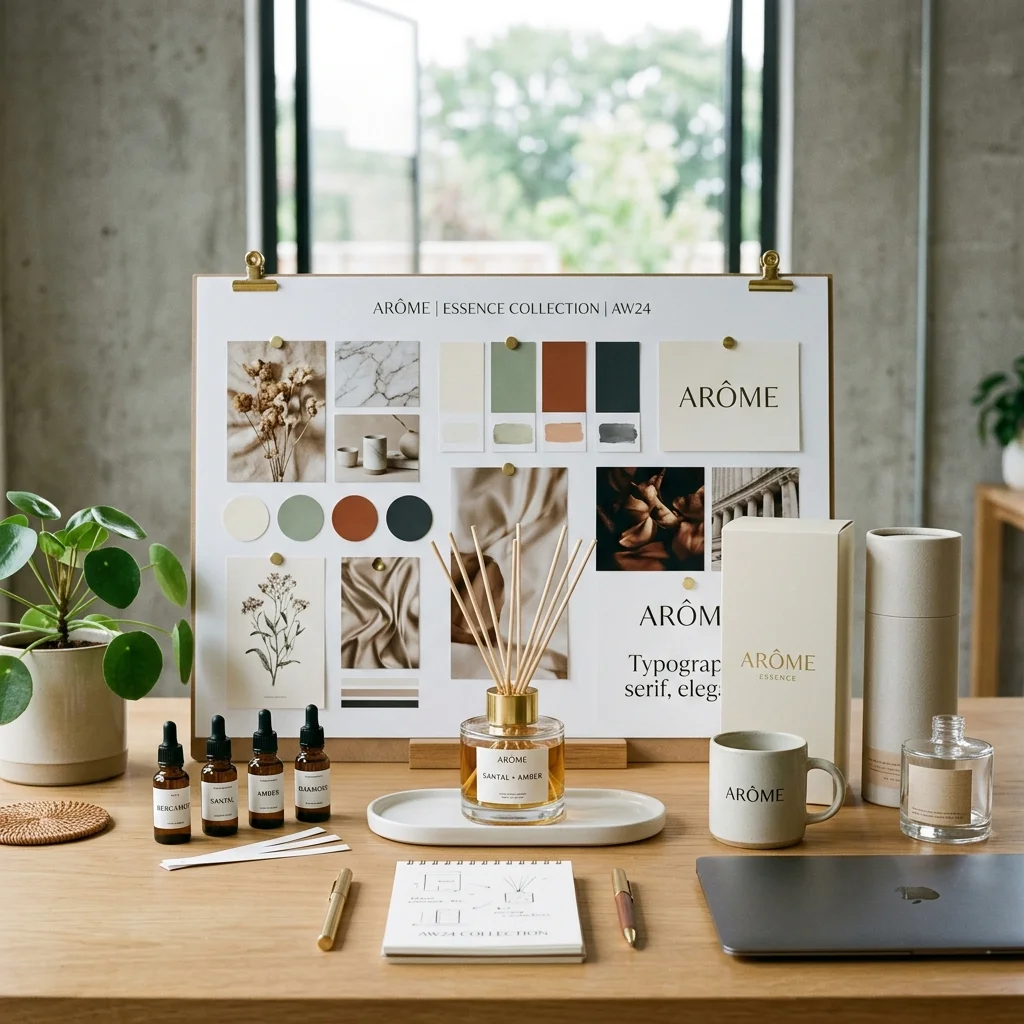
Short answer: A cafe fragrance strategy should support the atmosphere without competing with coffee, pastry and food aromas. Cafes and coffee brands can create a subtle scent identity and extend it into branded room sprays, reed diffusers, candles, cologne or gift products. The best concept is developed around the interior, menu, customer profile and commercial goals of the business.
Why cafes need a different scent approach
A cafe already has natural aromas from coffee, baked products, chocolate, spices and food preparation. Adding a strong unrelated fragrance can confuse the experience or reduce appetite.
The scent direction should therefore complement the natural environment. It may support warm woods, roasted notes, vanilla, soft spice, citrus peel, tea, fig or clean botanical elements without attempting to cover every existing aroma.
Scent identity versus air freshener
An air freshener is usually selected to add a general pleasant smell or reduce an unwanted odour. A scent identity is connected to the brand, interior and customer experience.
The goal is not maximum strength. The goal is recognition and consistency. Customers should experience the fragrance as part of the atmosphere, not as a separate chemical layer.
Create a cafe fragrance brief
Describe the interior materials, colours, lighting, music, menu, customer profile, location and busiest hours. Explain whether the brand feels artisanal, modern, premium, youthful, traditional or wellness-focused.
Also identify areas where fragrance should not be used, especially close to food preparation, tasting counters or products whose aroma is part of the purchase decision.
Suitable branded products for cafes
Room sprays can provide controlled use in entrances, restrooms or selected zones. Reed diffusers can be used in suitable non-food areas and sold as retail products. Candles can become a branded lifestyle product rather than an in-store fragrance source. Cologne can support Turkish hospitality, events and gifting. Small perfume or home-fragrance products can be included in seasonal gift boxes.
A coffee brand can also create products inspired by its identity without making every scent smell literally like coffee. Notes such as cardamom, cacao, woods, citrus, vanilla, tobacco, tea or clean musk can express the atmosphere more elegantly.
From in-store experience to retail product
Branded fragrance products allow customers to take part of the cafe experience home. They can increase average order value, support online sales and create gifts that remain visible after the customer leaves.
The packaging should connect clearly with the cafe brand. Cup colours, typography, pattern, interior materials and tone of voice can be translated into labels and boxes.
Technical development matters
Each product format needs its own formula and testing. Room spray requires compatible liquid, bottle and pump. Reed diffuser performance depends on the carrier base, reeds and bottle neck. Candles require wax, wick, vessel and burn testing. Cologne or perfume applied to the body follows a different product category.
The same creative scent direction can be adapted, but the products should not be treated as one identical formula.
MOQ and collection planning
Room fragrance and reed diffuser projects are commonly planned from around 1,000 units per variation. Candle projects start at 500 units per fragrance and per container model. PET cologne projects commonly begin from approximately 2,000 units.
A cafe should begin with one or two strong retail formats rather than a large catalogue. One room spray and one candle, or a diffuser and cologne gift set, may be more commercially manageable.
Safety, placement and staff use
The business should define where and how the product will be used. Staff instructions help prevent over-application. Products should be stored correctly and kept away from food contact or inappropriate areas.
Claims such as disinfectant, allergen-free or odour-neutralising should not be used without the appropriate product development and legal basis.
Ideas for cafe and coffee brand collections
A Mediterranean cafe could use bergamot, fig leaf and pale woods. A specialty coffee roaster might choose cardamom, cacao husk, cedar and soft amber. A modern bakery could use citrus peel, vanilla bean and clean musk. A tea-focused brand may prefer bergamot, jasmine, green leaves and light woods.
These are creative directions. Final fragrances should be evaluated in the intended product format and environment.
Frequently asked questions
Can a cafe use a signature fragrance without covering the smell of coffee?
Yes. The fragrance should be subtle, complementary and placed in suitable zones rather than used strongly throughout food areas.
Can the cafe sell the fragrance to customers?
Yes. The scent direction can be adapted into room sprays, reed diffusers, candles, cologne or other suitable branded products.
Can we create a coffee-scented candle?
Yes, subject to fragrance performance, wax compatibility, wick testing and the intended commercial position.
What is the best first product for a cafe?
A room spray, reed diffuser or candle can work well. The best choice depends on where it will be used, the retail price and the expected quantity.
Can packaging match our existing cafe branding?
Yes. Existing logos, colours, typography and interior references can guide label and box design.
Request a project-specific proposal
Turn your cafe atmosphere into a branded product customers can take home. Share your cafe concept, interior style, target quantity and preferred formats for a custom fragrance proposal.